Your Garbage Disposal Isn’t a Magic Portal (and Where Food Waste Really Ends Up)
Over the weekend, I had one of those "aha" moments in conversation - realizing that most people don't realize that garbage disposals, despite being promoted "convenient and safe" (by the manufacturers) and even environmental heroes for magically disappearing food scraps , they can actually be a hidden nuisance... not just for your own home plumbing system, but for the whole of our municipal wastewater infrastructure.
Not Just Your Sink. It’s the Whole Treatment Plant
Even if your pipes and disposal seem to handle that food waste just fine, the story doesn’t end there. Once those ground-up scraps leave your home, they travel through miles of sewer lines and end up at your local wastewater treatment plant.
Here’s the journey:
Preliminary Treatment – Screens and grit chambers remove large solids, but ground food particles are small enough to slip through. Primary Treatment – Those particles settle out into a thick sludge at the bottom of large tanks. This sludge has to be removed, hauled, and processed - adding to operational costs and energy use. Secondary Treatment – Microbes break down dissolved and suspended organic matter. But high loads from food waste increase Biological Oxygen Demand (BOD), meaning the plant must pump in more oxygen and energy to keep those microbes alive. Sludge Handling – The food solids captured earlier still have to be treated—often through anaerobic digestion (sometimes generating biogas) or by being trucked to landfills. If the system isn’t designed for food waste digestion, it’s just shifting the problem downstream.
Bottom line: That “gone in seconds” convenience in your kitchen often means extra costs, higher energy use, and more greenhouse gas emissions at the plant. And, yes, it's okay to use... if the wastewater treatment plant that your material eventually ends up at has anaerobic digesters with beneficial use of biogas. (If I just lost you, take a peek at this video).
What happens to the food you put down your garbage disposal? (YouTube)
Here's the Problem:
Methane emissions: Food waste decomposes rapidly in sewers, generating methane, a powerful greenhouse gas that contributes to climate change. In 2024, ReFED highlighted that wasted food is responsible for 14% of total U.S. methane emissions . Water treatment energy demands: Wasted food in wastewater increases the organic load, requiring more energy for wastewater treatment and potentially hindering nutrient recovery efforts at treatment facilities. Fatbergs: Fats, oils, and grease (FOG) from discarded food combine with other materials in sewers to form solid blockages known as "fatbergs". They're just as gross as they sound and can cause blockages in sewer system that lead to overflows (yuck) and huge costs to clear. Costly repairs: These fatbergs cause sewer backups, damage pipes and pumps, and require expensive removal and repair efforts, costing an estimated $25 billion annually in the US according to Popular Science . Exposure to harmful substances: Sewage contains harmful germs, bacteria, viruses, parasites, and worms that can cause a range of illnesses, from gastrointestinal problems to liver disease. Contaminated sludge fertilizer: Sewage sludge (biosolids) containing food waste may be used as fertilizer on agricultural lands. In 2024, the EPA released a draft report indicating that toxic "forever chemicals" (PFAS) in sewage sludge could pose cancer and other health risks to those living near or consuming foods from these farms.
Depending on where you live, the food sludge may be delt with in different ways, and there's plenty more reading you can do on that topic here if you're so inclined: Going Down the Drain: How Much Food is Wasted in the U.S.?
So don't treat your kitchen sink as a second trash can. Because that water eventually might just make its way back to you.
https://www.springfieldmo.gov/3260/Wastewater-Treatment-Plants
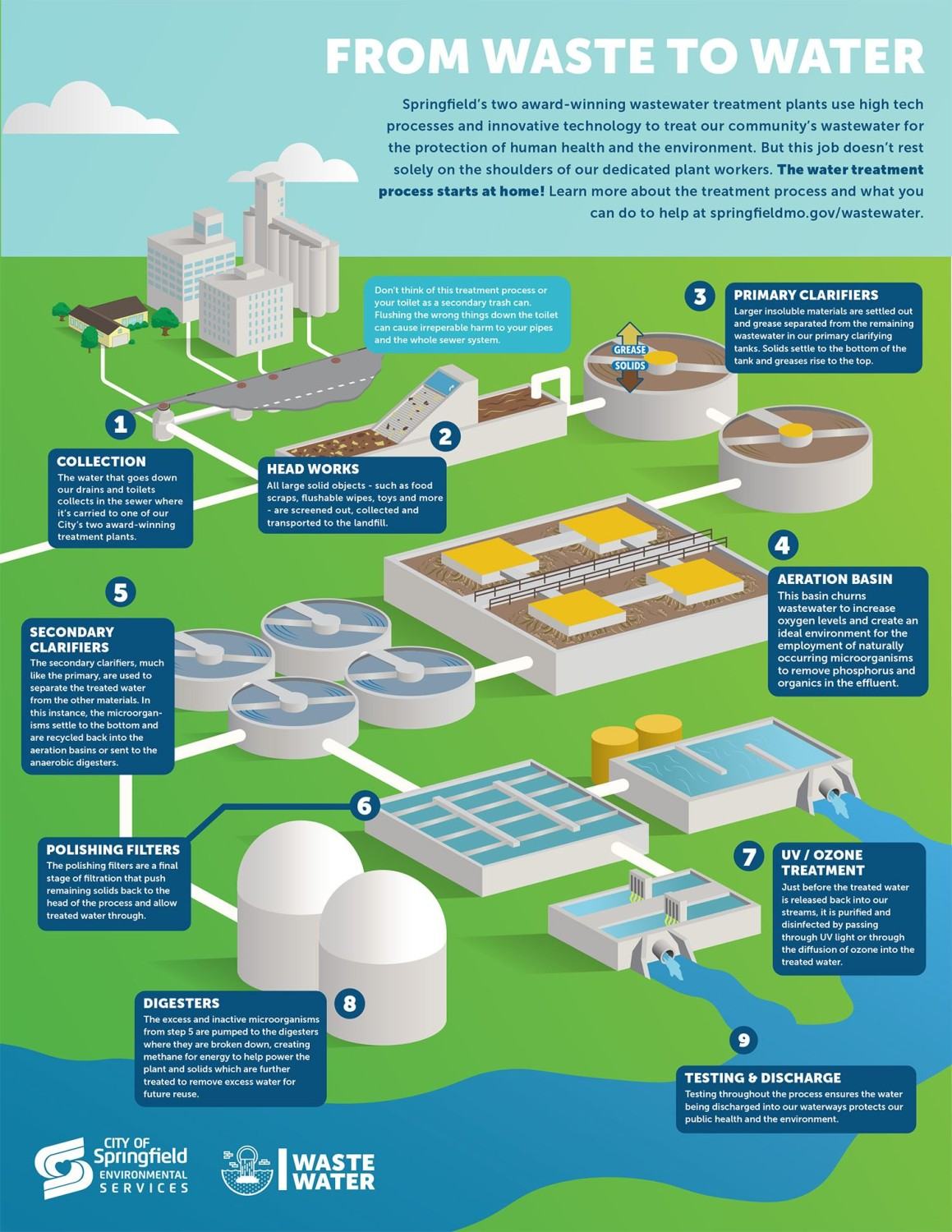
All this assumes the food waste successfully clears your home plumbing system (and it often doesn't, as you can ask your friendly neighborhood plumber). So...
Where Should Your Food Waste Go Instead?
The below is focused on areas where BranchPattern has offices, but you can follow the same hierarchy in your own city for preventing food waste :
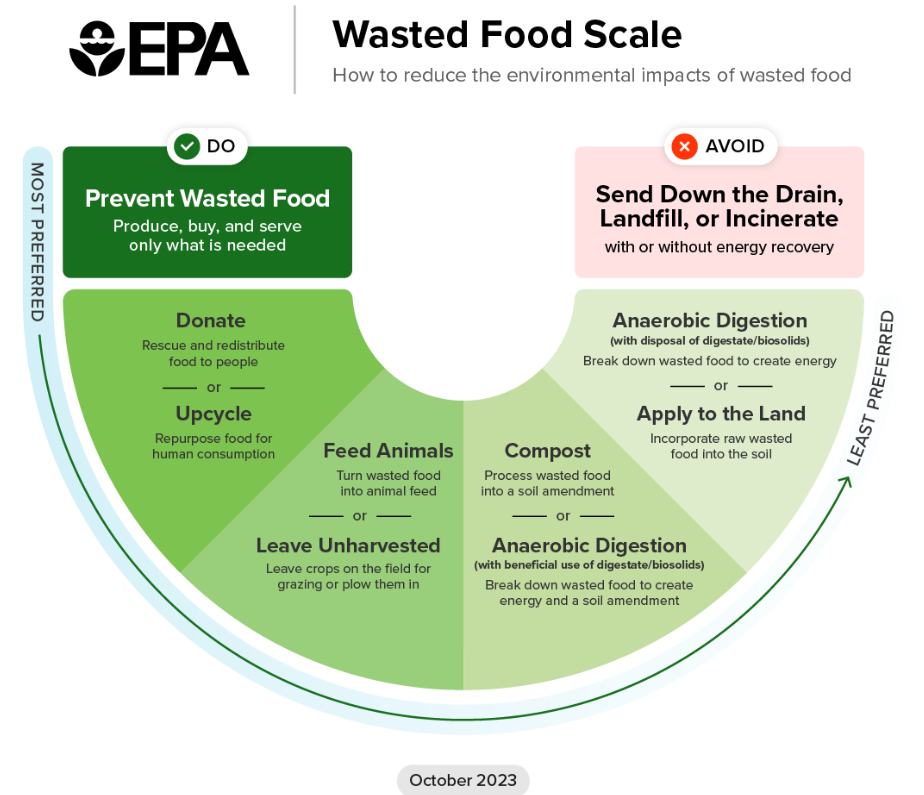
You'll probably notice that since we're talking about scraps from your plate that are headed down the drain, the alternatives of donate, feed animals are probably not options, so we're left with... COMPOST!
Kansas City
Free food waste drop-off at multiple city sites - just bring a BPI-certified compostable bag. https://www.kcmo.gov/city-hall/trash-and-recycling/compost Compost Collective KC – Curbside compost pickup since 2017 Also drop-off services. https://www.compostcollectivekc.com/ KC Can Compost – Compost + workforce development program for people experiencing homelessness. https://kccancompost.com/
Omaha
Hillside Solutions Compost Club – Drop-off and pickup options, plus compost back for your garden AND commercial compost services. https://www.hillside.solutions/
Denver
Curbside compost program expanding rapidly - 7,700 tons of food/yard waste collected Jan–May 2025 (72% more than last year). Curbside compost for all! Other local providers like Scraps and Compost Colorado .
Pittsburgh
Lots of composting services like Worm Return , The Compost People , and Carbon Compost Food scraps drop-off and compost services from Zero Waste Wrangler Good article from the City of Pittsburgh, here: https://www.pittsburghpa.gov/Business-Development/Sustainability/Food-Systems/Food-Waste and the SoilMill PGH pilot program, that seeks to improve soil quality in Pittsburgh through composting
And if you're not in an area that has composting services, and you're wondering How to Compost at Home Without Spending a Dime, check out this video below from Brent Crampton at Hillside Solutions :
How to Compost at Home Without Spending a Dime (YouTube)
TL;DR
Garbage disposals don’t make food waste “disappear.” They just move the problem downstream to energy-intensive wastewater plants and can cause long term infrastructure and health impacts. Composting keeps nutrients in the soil cycle, reduces greenhouse gases, and prevents costly infrastructure strain. But reducing food loss and waste in the first place is even better.
Up Next...
Any of the topics touched on here could also be their own article... composting, waste diversion, and food waste minimization - both at home and in commercial settings. If you have a preference, drop a comment to let me know what to share next.