Fugitive Emissions: A Blind Spot in Our Carbon Strategy
Now that we've solved embodied carbon, and decarbonizing the grid, and all the other things (kidding... kind of). Spoiler alert, the work of sustainability is never 'done'. So, what's next on the horizon?
Fugitive Emissions.
They're just as sneaky as it sounds - and are worth some more focused attention. Because it's time to treat refrigerant management with the same rigor we've given to energy efficiency.
What we mean by “fugitives” (and why they matter)
When most of us think about operational carbon, we picture energy use: electricity, combustion, and the emissions tied to the grid. But fugitive emissions are different. They’re the unintended releases of greenhouse gases (GHG)—often refrigerants—from building systems and equipment.
Definition from Living Future Zero Carbon Program Manual : Emissions from unintentional or intentional but irregular releases of greenhouse gasses (GHG) to the atmosphere which could not reasonably pass through a stack, chimney, vent, or other functionally equivalent opening. Example: refrigerant leaks.
Common sources include:
HVAC systems (refrigerants) Fire suppression systems Industrial piping and processes
Why does this matter? Many refrigerants have extremely high Global Warming Potential (GWP). Even small leaks can have an outsized climate impact. For example, The MEP 2040 Refrigerant Impact Calculator (refrigerant‑impact.org ) is a straightforward, transparent tool aligned to the Refrigerants 101 framing
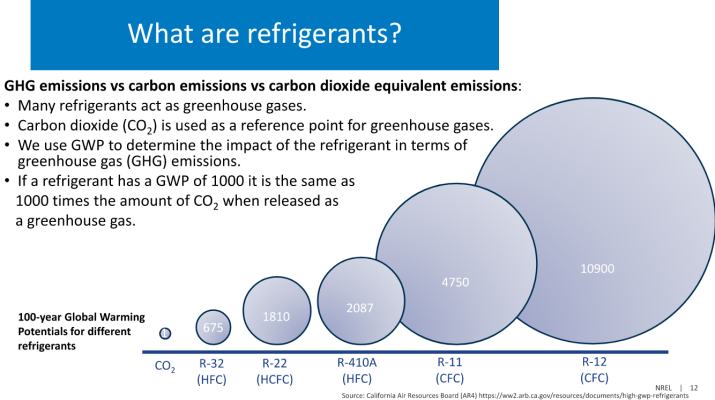
Why Should We Care?
Carbon Accounting: Fugitive emissions fall under Scope 1 for building owners and can significantly affect ESG reporting. Regulatory Pressure: EPA rules, ASHRAE standards, and programs like ILFI Zero Carbon are pushing refrigerant management. Market Expectations: Commitments like MEP 2040 make low-GWP refrigerants and leak prevention part of the conversation.
Estimated at 5% of global GHG emissions, fugitive emissions are a blind spot in climate strategies—hard to detect, hard to measure, and often overlooked.
Carbon Accounting: Fugitive emissions fall under Scope 1 for building owners and can significantly affect ESG reporting. Regulatory Pressure: EPA rules, ASHRAE standards, and programs like ILFI Zero Carbon are pushing refrigerant management. Market Expectations: Commitments like MEP 2040 make low-GWP refrigerants and leak prevention part of the conversation.
Estimated at 5% of global GHG emissions, fugitive emissions are a blind spot in climate strategies—hard to detect, hard to measure, and often overlooked.
What Can We Do About It?
For those of us in CRE and building operations, here’s where we start:
1. Inventory & Baseline
Track refrigerant types and quantities. Document equipment with refrigerant charges. Establish a baseline using historical data.
2. Leak Prevention & Detection
Implement preventive maintenance programs. Use advanced leak detection systems and infrared cameras. Follow ASHRAE and EPA guidelines for testing frequency.
3. Specify Low-GWP Refrigerants
Make it a design priority. For new systems, consider A2L (e.g., R‑32, R‑454B) or naturals (R‑290, R‑744, R‑717 where appropriate), subject to safety class and code compliance For retrofits, evaluate HFO/HFO‑blend options (e.g., R‑513A in place of R‑134a chillers). See NREL’s transition guide for pros/cons.
4. Recovery & Disposal
Ensure proper recovery during servicing and end-of-life (EoL). use reclaimed HFCs where mandated (and increasingly, where prudent) Comply with EPA Section 608 and ASHRAE standards.
5. Report Transparently
Include fugitive emissions in ESG and carbon disclosures. Align with frameworks like ILFI Zero Carbon and MEP 2040, plus guidance from ASHRAE
The Big Question & Call to Action
How do we make refrigerant management as mainstream as energy efficiency? What tools, policies, or partnerships have worked for you?
We've had plenty of internal discussions on this topic, and are working to integrate refrigerant planning into discussions for decarbonization roadmaps, certification pathways, and more responsible engineering design.
I know some of my colleagues here at BranchPattern have also been thinking deeply about this: Adam Bertonaschi , Kristy M. Walson, PE, LEED Fellow, BEMP , Carlos Kelly , Eliana Peralta-Sapienza MSc LFA , Hetvi Vora , and @julia - what else is on your radar?
This topic is squarely in the #ESG crosshairs and moving fast in code, standards, and market expectations. Getting out ahead with standardized calculators, consistent reporting, and visible choices of low‑GWP alternatives will distinguish owners and project teams in 2026 and beyond.
#Sustainability #Decarbonization #MEP2040 #FugitiveEmissions #ClimateAction #Refrigerants #RefrigerantManagement
Want to dive deeper?
Better Buildings Webinar: Inventorying Building Refrigerants and Reducing Leaks HFC Phasedown and the AIM Act: Frequent Questions on the Phasedown of Hydrofluorocarbons MEP 2040 Resources (including refrigerant impact calculator) CLF forum discussion on Fugitive Emissions ASHRAE 228‑2023 (Standard Method of Evaluating Zero Net Energy and Zero Net Carbon Building Performance) ASHRAE 240P (Quantification of Life Cycle Greenhouse Gas Emissions of Buildings)