Why Is It So Hard to Make Everyone Comfortable?
Have you ever been in a meeting where one person is reaching for a sweater while someone else is asking to turn down the thermostat?
If so, you've experienced one of the great challenges of building design: thermal comfort.
At first glance, thermal comfort seems simple. Just set the thermostat to the "right" temperature and everyone should be happy... right?

Not Quite.
As it turns out, thermal comfort is one of the most complex and personal aspects of the indoor environment. It's also one of the biggest factors influencing how people feel about a building. Research consistently shows that thermal comfort affects health, productivity, satisfaction, and overall well-being.
One of the things I love about thermal comfort is that it reminds us buildings are usually about people, not equipment. We can design the most efficient HVAC system in the world, but if occupants don't feel comfortable, we've missed the mark. The best buildings balance performance with experience, creating spaces that support health, productivity, and well-being for the people who use them every day.
Comfort Is More Than Temperature
When most people think about comfort, they think about the number displayed on a thermostat. But temperature is only one piece of the puzzle.
According to thermal comfort research, comfort is influenced by six interacting factors:
Air temperature Humidity Air movement Radiant temperature from surrounding surfaces Clothing Activity level
In other words, two people can sit side by side in the same room and experience it completely differently because they're wearing different clothes, moving at different activity levels, or sitting near different surfaces.
Think about sitting next to a cold window on a winter day. Even if the thermostat says 72°F, you may still feel chilly because your body is losing heat to that cold surface. Conversely, direct sunlight through a window can make a space feel warmer than the thermostat suggests.
Why Buildings Can Never Please Everyone
One of the most important concepts in thermal comfort is that comfort is subjective.
The official definition of thermal comfort is "the condition of mind that expresses satisfaction with the thermal environment." In other words, comfort isn't just a physical condition. It's a personal experience.
That's why designing comfortable buildings isn't about finding one perfect temperature. It's about creating conditions that work well for the largest number of people while providing as much individual control as possible.
This is where thoughtful building design matters. Well-designed HVAC systems, effective building envelopes, appropriate zoning, and occupant controls all contribute to creating spaces that can adapt to different needs and preferences.
The Hidden Role of Humidity
Humidity is often overlooked until it becomes a problem.
Too much humidity can make a space feel sticky and uncomfortable because our bodies rely on evaporating sweat to cool down. High humidity can also contribute to mold growth and other indoor environmental concerns.
Too little humidity brings a different set of challenges. Dry air can irritate the eyes, skin, throat, and respiratory system. Anyone who has experienced a Midwestern winter indoors knows that feeling.
The sweet spot generally falls somewhere in the middle, which is why humidity control plays such an important role in healthy, comfortable buildings.

Comfort and Productivity Are Connected
Thermal comfort isn't just about avoiding complaints.
Studies have shown that people perform worse when they're too hot or too cold. Even relatively small deviations from comfortable conditions can affect concentration, decision-making, and productivity.
For schools, that can influence learning outcomes.
For workplaces, it can affect employee performance and satisfaction.
For healthcare facilities, it can contribute to patient and staff experience.
The stakes are higher than many people realize.

Giving People More Control
One of the most effective ways to improve thermal comfort is surprisingly simple: give people options.
Whether it's operable windows, access to local controls, personal comfort devices, or modern mobile applications (or websites ) that allow occupant feedback, people tend to be more satisfied when they have some ability to influence their environment.
Control doesn't necessarily mean everyone gets their own thermostat. It means creating systems that acknowledge human differences and provide flexibility where possible.
The Bigger Picture
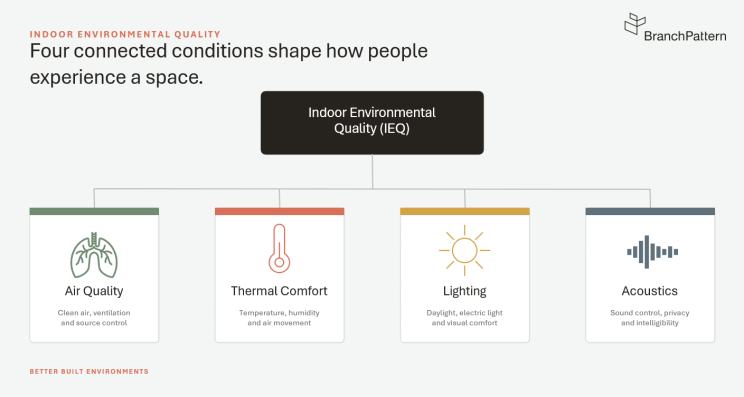
Thermal comfort is one component of a larger concept called Indoor Environmental Quality (IEQ), which also includes air quality, lighting, and acoustics. Together, these factors shape how we experience the indoor spaces where we spend more than 90% of our lives.
As building scientists, we often focus on technical performance metrics. But at the end of the day, buildings are (oftentimes) for people.
The goal isn't simply to hit a temperature target.
It's to create environments where people can thrive.
And sometimes, that starts with understanding why person is reaching for a sweater while another is turning on a fan.